


The United States has dominated the global technology market for decades. Now China is determined to challenge that supremacy. The world’s second-largest economy is investing billions in artificial intelligence and robotics. Its key aim is to develop high-end chips that can compete with the world’s most advanced technology.
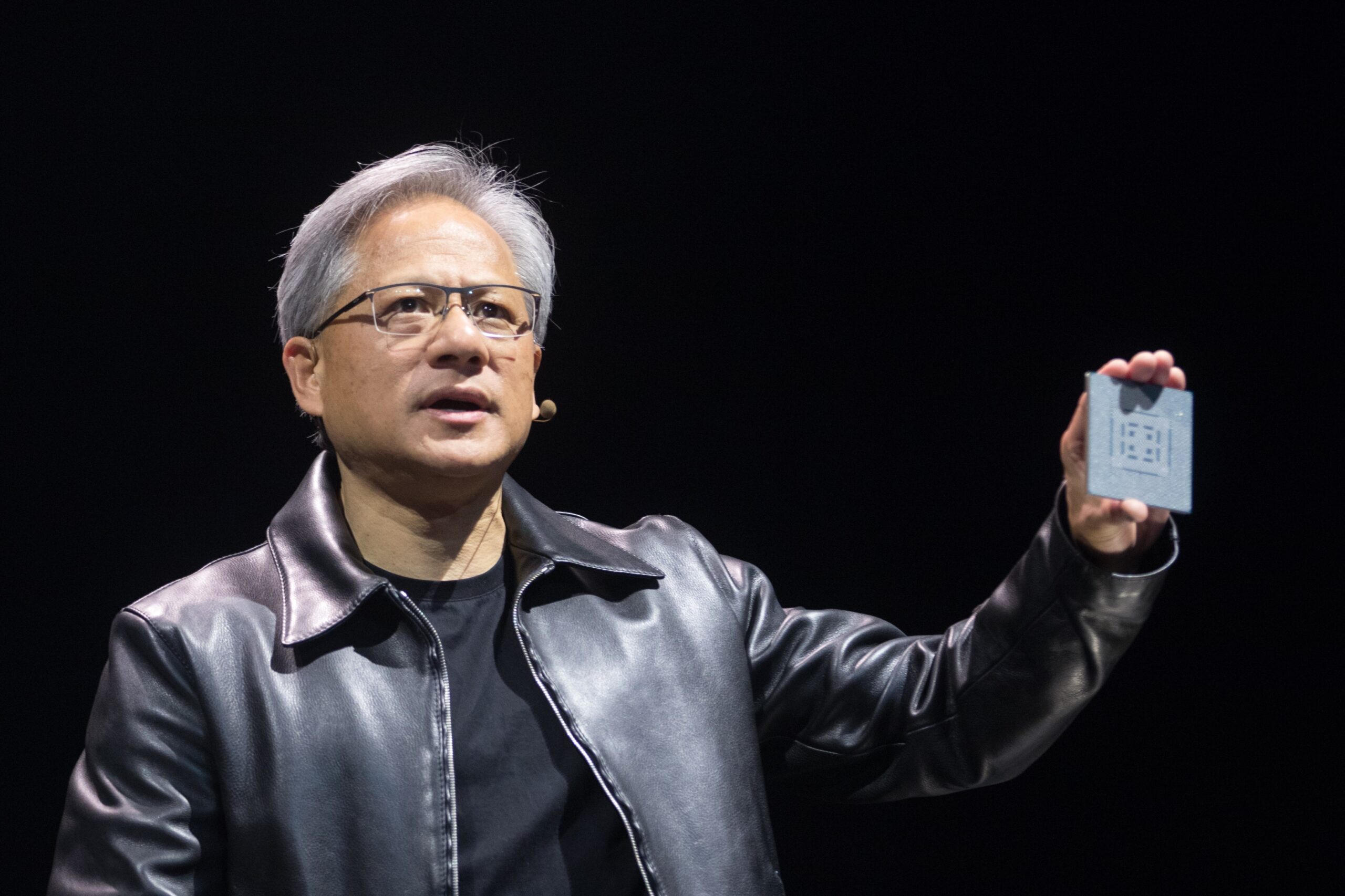
Last month, Nvidia CEO Jensen Huang warned that China was only “nanoseconds behind” the U.S. in chip development. Beijing is pushing hard to close the gap and reduce its reliance on imported technology.
DeepSeek Marks China’s AI Breakthrough
In 2024, the Chinese startup DeepSeek surprised the tech world by launching a competitor to OpenAI’s ChatGPT. The model reportedly trained at a fraction of the cost and required far fewer high-end chips than its rivals.
The announcement briefly shook Nvidia’s stock and highlighted China’s growing seriousness in AI. Since then, momentum in the Chinese tech sector has accelerated. Many domestic firms now aim to rival Nvidia and supply advanced chips locally.
In September, state media reported that Alibaba developed a chip matching Nvidia’s H20 semiconductors in performance while consuming less energy. These H20 processors are adapted for China under U.S. export restrictions.
Huawei unveiled its most powerful chips yet and revealed a three-year plan to compete directly with Nvidia in AI. The company also promised to share its designs and software publicly, encouraging local developers to rely less on U.S. technology.
Other Chinese firms are gaining ground fast. MetaX secured contracts with state-owned telecom operator China Unicom. Cambricon Technologies, based in Beijing, saw its Shanghai-listed shares more than double in three months as investors bet on China’s push for chip independence.
Tencent, the owner of WeChat, is another major player adopting Chinese-made chips. State-backed trade shows showcase these innovations, attract investors, and highlight China’s growing tech capabilities.
A Nvidia spokesperson acknowledged the competition, stating that customers will choose the best technology. The company emphasized it will continue working to earn global developers’ trust.
Analysts, however, urge caution. Many Chinese claims lack publicly available data and standardized testing. Computer scientist Jawad Haj-Yahya said Chinese processors perform well in predictive AI but still lag in complex analytics. “The gap is narrowing,” he said, “but it will not close quickly.”
China’s Strengths and Challenges
In a recent podcast, Jensen Huang praised China’s vast talent pool, intense domestic competition, and rapid progress in chipmaking. He described the sector as “a vibrant, high-tech industry” and warned that the U.S. must “compete for its survival.”
China has long sought global tech leadership and aims to reduce reliance on the West. Beijing has invested billions in what President Xi Jinping calls “high-quality development,” covering AI, renewable energy, and advanced manufacturing.
Even before Donald Trump returned to the White House, China spent tens of billions transforming its economy from a manufacturing hub into an innovation powerhouse. The ongoing tariffs war has intensified the mission. Xi has vowed China will no longer rely on “anyone’s gifts.”
Huang also warned that trade restrictions could give China an advantage in AI. His comments came as Beijing launched an anti-monopoly probe into Nvidia, signaling increased pressure on foreign tech firms.
China’s state-led model can slow innovation, according to Professor Chia-Lin Yang from National Taiwan University. She said focusing too heavily on collective goals may limit disruptive ideas.
She added that Chinese chips can be less user-friendly than Western alternatives. Still, she believes China’s engineers will soon close the gap. “Never underestimate China’s ability to catch up,” she said.
Chips as a Strategic Tool in Trade Relations
Professor Yang described China’s recent chip announcements as a “bargaining chip” in trade talks with Washington. Beijing wants to pressure the U.S. into resuming sales of advanced equipment or risk losing access to its massive market, said Dr. Haj-Yahya.
These announcements show confidence, yet China still relies on U.S. technology for the most advanced chips. Experts agree Beijing can replace American chips in simpler systems but lacks the raw power for high-end AI projects.
Semiconductor engineer Raghavendra Anjanappa said China still depends on U.S. components for advanced projects. Despite rapid progress, China trails the U.S., South Korea, and Taiwan in mature supply chains.
Washington has tightened export rules to slow China’s rise, including blocking access to Nvidia’s top-tier chips. “The U.S. has targeted China’s deepest dependency,” Raghavendra said.
Still, he added that China is closing the gap quickly. “In five years, China may become fully independent from U.S. technology.”
