


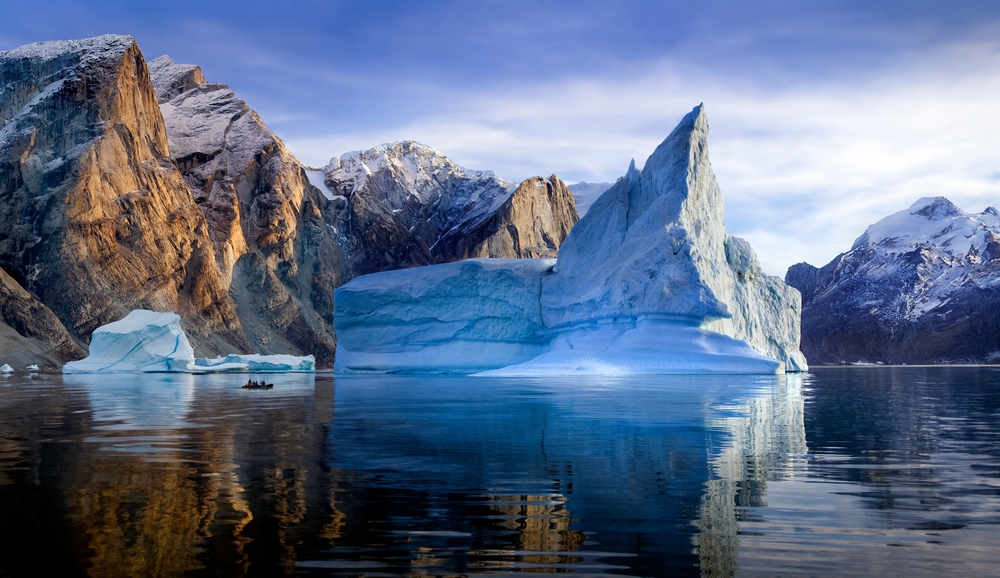
Greenland, the vast Arctic island off Canada’s northeastern coast, has become the center of a geopolitical debate after the White House confirmed that the use of the US military remains “an option” in President Donald Trump’s renewed push to bring the territory under American control. With more than two-thirds of the island inside the Arctic Circle, Greenland has long held strategic significance for North American defense and global security.
Trump first suggested buying Greenland, a self-governing territory of Denmark, during his first term. The idea resurfaced following a recent US operation that captured Venezuelan President Nicolás Maduro, with Trump citing Greenland’s strategic importance amid rising activity by China and Russia in the Arctic.
White House Signals Flexibility, But Allies Push Back
White House press secretary Karoline Leavitt said acquiring Greenland is a national security priority and that the president is exploring a range of options. “Utilising the US military is always an option at the commander in chief’s disposal,” she said.
However, Trump’s envoy to Greenland, Louisiana Governor Jeff Landry, and deputy White House chief of staff Stephen Miller have suggested military action may not be necessary. Republican House Speaker Mike Johnson also dismissed the idea, saying armed intervention would be inappropriate.
European allies responded quickly. Leaders from France, Germany, Italy, Poland, Spain, and the UK joined Danish Prime Minister Mette Frederiksen in affirming that Greenland “belongs to its people.” Canadian Prime Minister Mark Carney echoed the sentiment, announcing an upcoming visit to Greenland by Canada’s Governor General Mary Simon, of Inuit descent, and Foreign Minister Anita Anand.
Greenland’s Strategic and Economic Significance
Greenland’s strategic value lies in both its location and resources. The US operates the Pituffik Space Base in northwestern Greenland, built under a 1951 defense agreement with Denmark, supporting missile warning, missile defense, and space surveillance for the US and NATO. The island also guards a section of the GIUK Gap—critical waters where NATO monitors Russian naval movements between Greenland, Iceland, and the UK.
Beyond its military importance, Greenland is rich in rare earth minerals essential for electronics, batteries, and renewable energy technology. Potential offshore deposits of oil and natural gas have also been identified. The combination of resources and strategic positioning has made Greenland a focal point in US, Danish, and Arctic security discussions.
Debate Over Sovereignty and US Interests
Despite Trump’s insistence that Greenland should fall under US control, Denmark and Greenland’s leaders firmly reject the idea, warning that such a move could undermine NATO. Miller has questioned Denmark’s territorial claim but insisted there is no imminent threat of armed conflict.
Greenlanders enjoy self-rule and the legal right to pursue independence, a status codified in 2009 legislation. While US officials like Landry express interest in talking directly with Greenland residents, most Greenlanders appear focused on local governance rather than becoming part of the United States. For now, Greenland’s future remains a matter for its people and Denmark, even as global powers watch closely.
