


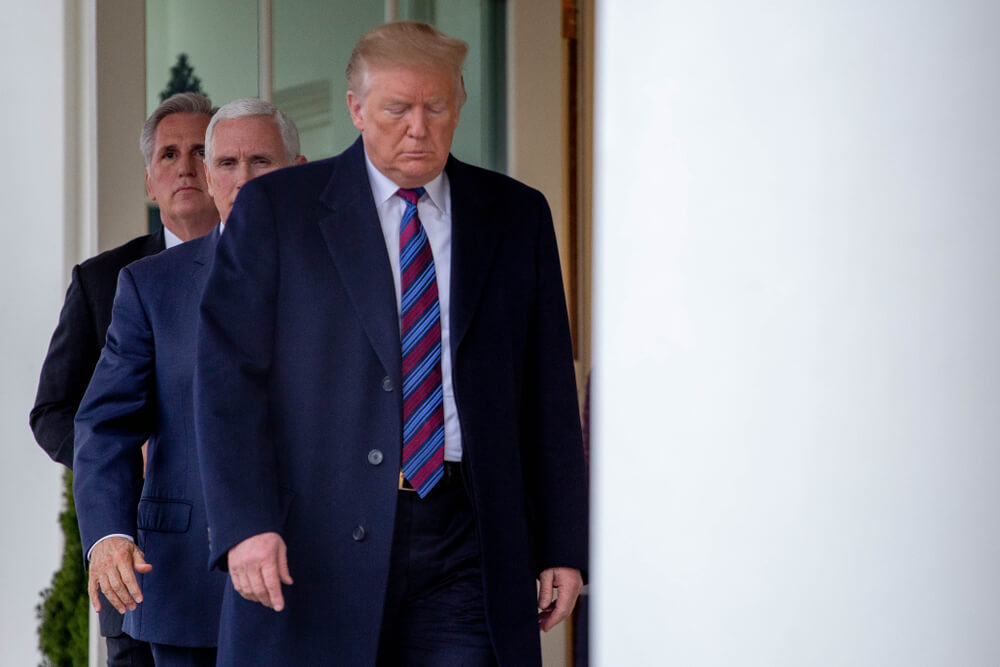
US President Donald Trump revoked a 2009 scientific finding that classified greenhouse gases as a threat to public health. The rule had formed the legal backbone for federal regulations on emissions from vehicles, power plants, and industry.
The White House called the action the “largest deregulation in American history,” claiming it will lower vehicle costs by $2,400 and reduce burdens on automakers. Environmental groups said it is the most significant climate rollback yet and vowed to challenge it in court.
Trump attacks Obama-era climate policy
Speaking in the Oval Office, Trump said the 2009 finding was “a disastrous policy that hurt the American auto industry and increased consumer costs.” He called Democrats’ climate agenda a “radical scam” built on the rule.
Former President Barack Obama said the repeal leaves Americans less safe and less healthy. He argued the change mainly benefits the fossil fuel industry at the public’s expense.
The role of the endangerment finding in US law
The Environmental Protection Agency first assessed greenhouse gases in 2009, declaring six major gases, including carbon dioxide and methane, a threat to human health. With Congress unable to pass climate legislation, the finding became central to federal regulatory efforts.
Meghan Greenfield, former EPA attorney, said the rule governs emissions from vehicles, power plants, oil and gas production, landfills, and aircraft. “All standards across sectors rely on this single determination,” she explained.
Trump officials argued the rollback could save more than $1 trillion and reduce energy and transport costs. They claimed automakers will save $2,400 per vehicle. Diana Furchtgott-Roth, formerly with the Department of Transportation, said the regulations had pushed manufacturing overseas to dirtier production sites.
Environmental experts disputed the administration’s claims. Peter Zalzal from the Environmental Defense Fund warned Americans could face $1.4 trillion in added fuel costs, 58,000 extra premature deaths, and 37 million more asthma attacks.
Impacts on the auto industry
Automakers may face uncertainty as producing less fuel-efficient vehicles could limit international sales. Climate law expert Michael Gerrard said the rollback enforces relaxed fuel economy standards but may hurt global demand for US cars.
Observers noted unintended consequences. The 2009 finding allowed federal authorities to block stricter state laws and climate-related nuisance lawsuits. Greenfield said the rule had blocked many cases and predicted new legal challenges from states and nonprofit groups.
Scientific debate
The Department of Energy formed a panel last year questioning widely accepted science on greenhouse gas warming. That report guided the proposal to overturn the 2009 finding. Many experts criticized the panel as biased and unrepresentative.
A federal judge ruled the department violated the law in forming the panel. Legal analysts said the administration may seek a Supreme Court review. If successful, the repeal could become permanent, preventing future presidents from reinstating the rule without Congress.
Greenfield said, “The EPA is leaving this space entirely. A Supreme Court ruling would block any future president from reversing this decision.”
