


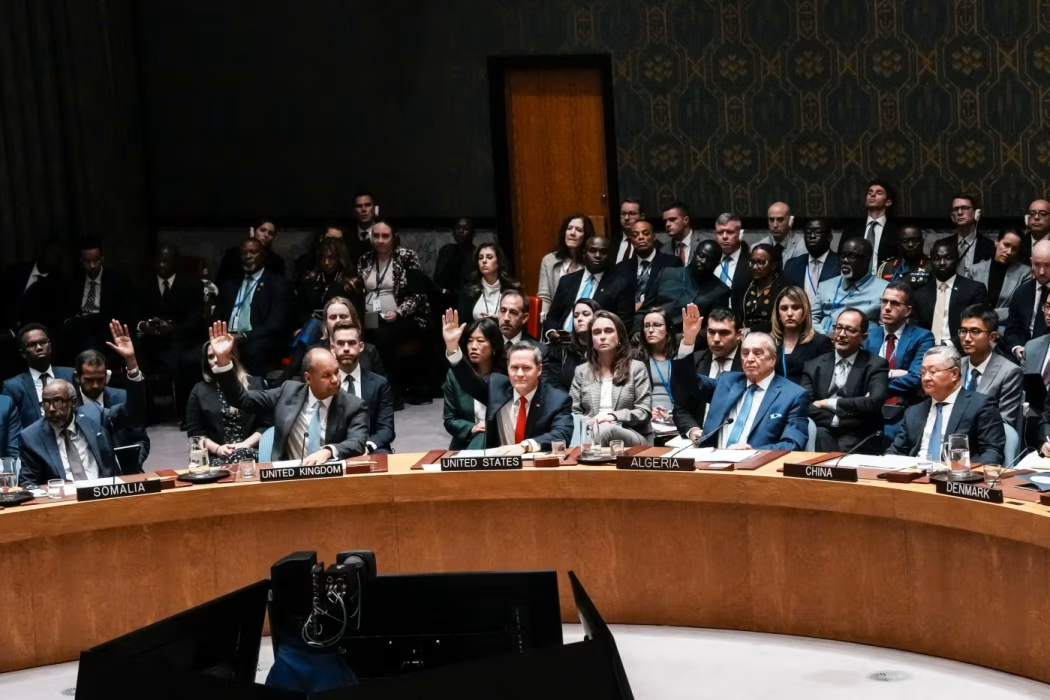
The U.N. Security Council has formally approved a 20-point Gaza peace plan aimed at easing tensions in the region. The plan emphasizes the disarmament of Hamas and a framework for long-term diplomatic progress.
Council members voted in favor of the resolution after weeks of negotiations, marking a notable step toward international efforts to stabilize Gaza. The plan sets clear expectations for regional actors, with a focus on reducing violence and promoting cooperation.
The approval was widely welcomed by diplomatic analysts who see it as a key moment for U.S. policy in the Middle East. The United States played a central role in shaping the plan, highlighting its ongoing influence in international conflict resolution.
The peace plan outlines measures for disarmament, humanitarian support, and governance reform. It also calls for international monitoring to ensure compliance with its objectives. Experts say that if fully implemented, the plan could reduce hostilities and create a foundation for sustainable peace.
Critics caution that challenges remain. Hamas has a history of resisting external mandates, and some members of the council stress that enforcement will be essential. Nevertheless, supporters argue that formal endorsement by the U.N. Security Council strengthens the legitimacy of the plan and encourages cooperation from regional and global stakeholders.
The council’s resolution also urges neighboring countries to support the peace efforts. This includes providing humanitarian aid and facilitating dialogue between conflicting parties. Analysts note that regional backing will be crucial to achieving the plan’s goals.
The plan emphasizes the need for immediate actions to protect civilians and prevent escalation. It also promotes long-term strategies such as rebuilding infrastructure and improving economic conditions in Gaza. By combining short-term measures with broader reforms, the plan aims to create a pathway for lasting peace.
Global observers have highlighted the significance of this diplomatic move. The approval demonstrates the U.N.’s ability to coordinate international efforts and provide a structured approach to conflict resolution. It also signals a unified commitment from world powers to address longstanding issues in Gaza.
Many see the U.S. role as pivotal in bringing the plan to the council. American diplomats worked closely with regional allies to draft a proposal that balances security concerns with humanitarian needs. The resulting plan reflects a blend of strategic priorities designed to encourage compliance from all parties involved.
Implementation of the plan will be closely monitored by international agencies. The council has requested regular updates to ensure transparency and accountability. Observers note that ongoing assessment will be critical to adapt strategies and address obstacles as they arise.
Supporters of the resolution argue that this approach offers a rare opportunity for progress in Gaza. By framing the plan around disarmament and structured diplomacy, the council hopes to reduce violence and foster cooperation among conflicting groups.
While challenges remain, the U.N. Security Council’s approval of the 20-point Gaza peace plan marks a significant diplomatic achievement. Analysts suggest that continued international engagement and enforcement measures could make it a turning point for the region.
