


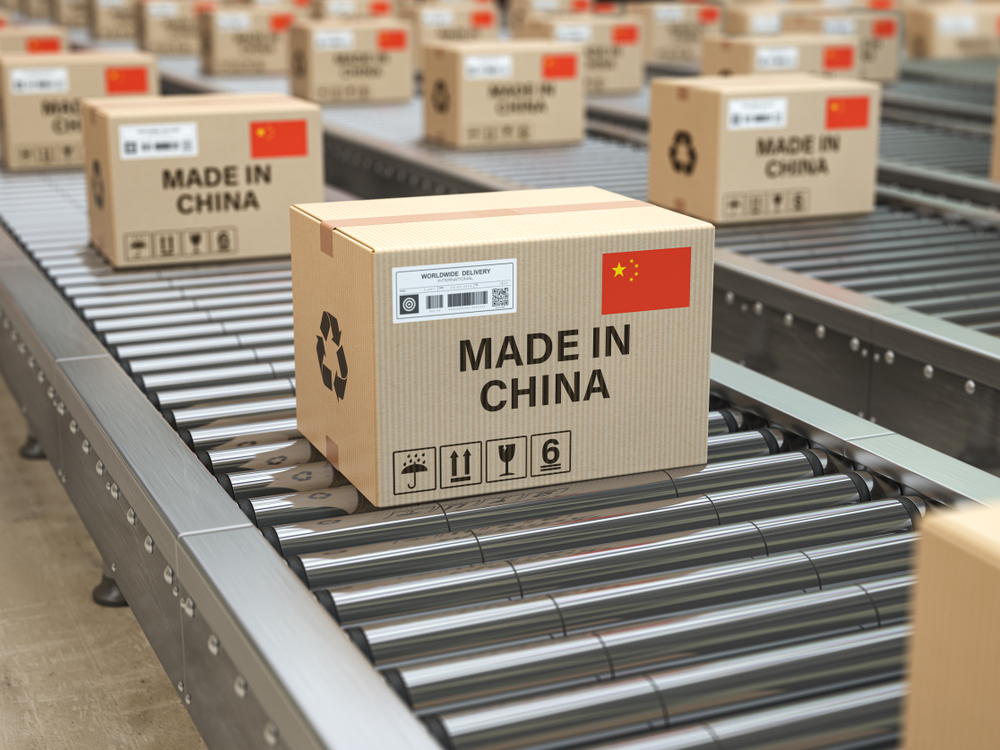
China’s export expansion threatens Europe’s economy, and Goldman Sachs warns of GDP losses in Germany, Italy, France, and Spain.
Beijing’s renewed push for export-led growth increases global trade competition, hitting European economies hardest.
Goldman Sachs cuts European growth forecasts in response to rising Chinese exports.
Economist Giovanni Pierdomenico says rising Chinese supply worsens the euro area’s trade deficit and weakens its international competitiveness.
He projects that stronger Chinese exports will reduce eurozone GDP by 0.5% by 2029.
Germany will suffer the most, with GDP falling about 0.9% over four years.
Italy faces a 0.6% decline, and France and Spain each lose roughly 0.4%.
Goldman notes the large substitution between Chinese and European goods in global markets worsens Europe’s situation.
Over five years, eurozone exporters lost up to four percentage points of market share to China.
For every additional dollar of Chinese exports, European exports drop twenty to thirty cents.
This displacement steadily erodes Europe’s competitiveness.
Europe’s Limited Options Against China
The European Union introduced policies like the Critical Raw Materials Act and AI Continent Action Plan to boost resilience.
Goldman Sachs doubts the EU’s initiatives can counter Chinese export pressure effectively.
Analyst Filippo Taddei says Europe struggles to respond because it relies heavily on China for critical inputs.
Targeted restrictions may work, but broad actions risk disrupting supply chains that Europe depends on.
Despite programmes, the EU remains structurally dependent on foreign suppliers.
Goldman warns insufficient funding limits the EU’s capacity to restore export competitiveness.
A cautious approach risks further industrial decline, while aggressive policies could backfire.
Europe’s Industrial Resolve Under Test
Goldman highlights that defence is the only major policy area with substantial funding.
The EU allocated €150 billion to the Readiness 2030 (ReArm Europe) programme, unlike underfunded industrial initiatives.
Europe still relies on Chinese rare earths for weapons, drones, sensors, and advanced electronics.
Goldman warns Europe risks losing ground in sectors it once dominated without a unified industrial strategy.
Analysts question whether Europe can achieve industrial sovereignty or continue relying on fiscal support and consumer resilience to withstand global competition.
