


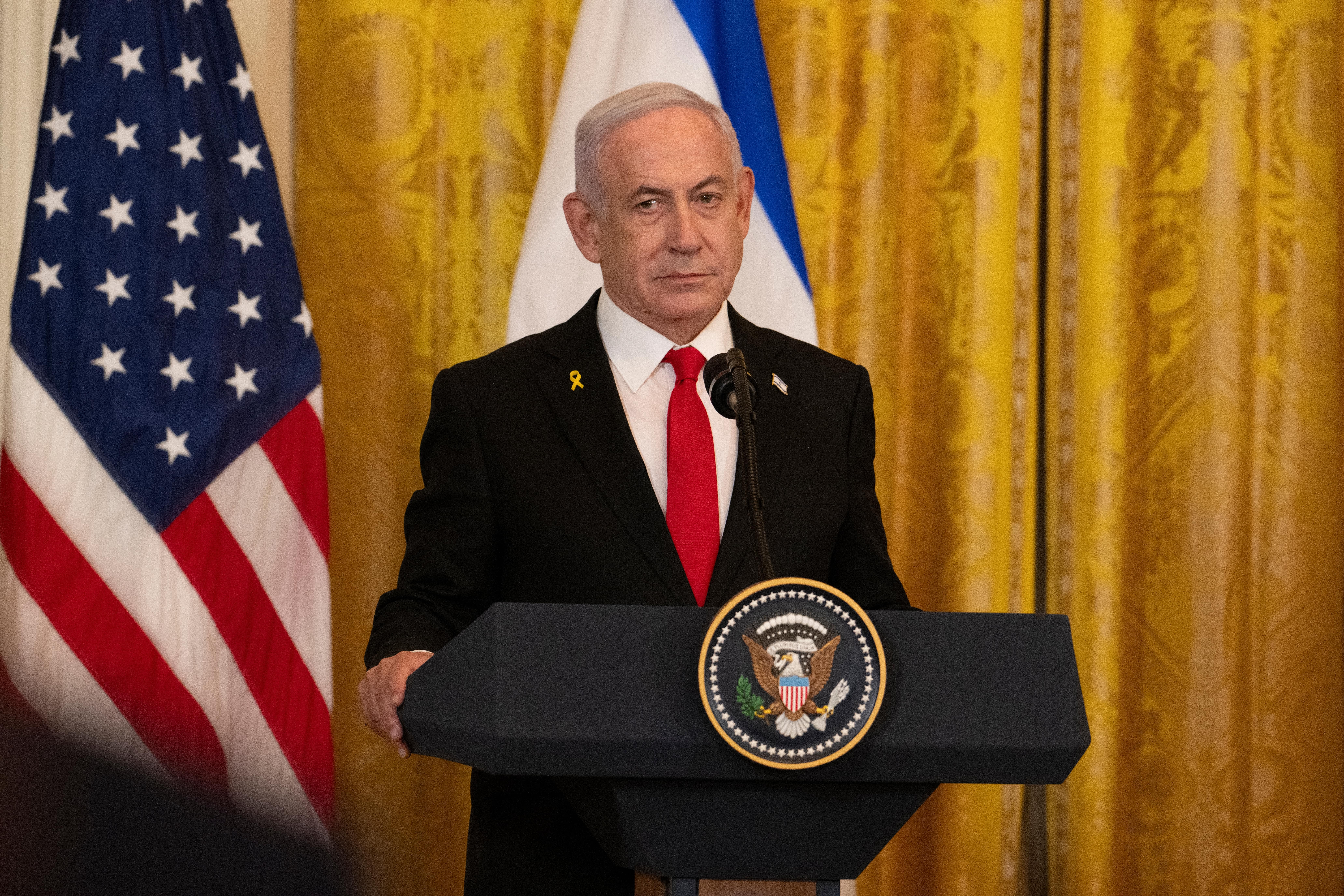
US President Donald Trump and Israeli Prime Minister Benjamin Netanyahu introduced a new 20-point framework on September 29 to resolve the Gaza conflict.
Trump announced the plan after intense negotiations involving Egypt, Qatar, and Turkey, all playing central roles in facilitating dialogue.
The deal emerged after an Israeli strike on Doha, which breached Qatari airspace and targeted Hamas negotiators, triggering global backlash.
Following domestic political shifts in Washington, Trump exerted direct pressure on Israel to halt military operations.
By his second term, Israel had already achieved its primary military objectives in Iran, Lebanon, and Gaza, allowing diplomatic negotiations to begin.
On October 8, Trump confirmed that Israel and Hamas had agreed to sign the first phase of the deal, setting the foundation for future peace efforts.
Phase One: Ceasefire and Humanitarian Relief Begin
Under phase one, the agreement orders an immediate and total ceasefire, with all hostilities suspended and frontlines frozen.
Both parties must release detainees within 72 hours — Israel must free 1,950 Palestinian prisoners, while Hamas must return all Israeli hostages.
Among the freed prisoners are 250 serving life sentences, marking one of the largest exchanges since the war began.
Humanitarian operations will restart instantly, with aid convoys entering Gaza through coordinated efforts between Egypt and international agencies.
The plan prioritizes restoring food, water, and medical supply access for Gaza’s population, heavily affected by years of conflict.
International monitors from the United Nations and the Red Crescent will verify compliance with the truce and prisoner releases.
Phase Two: Security Reforms and De-Radicalization Efforts
After all hostages are released, negotiators will begin phase two, focusing on dismantling Hamas’s military capabilities.
The plan mandates the destruction of tunnels, missile sites, and command centers to ensure Hamas cannot launch further attacks.
It defines Gaza as a “demilitarized and terror-free zone” under strict international supervision.
Amnesty will apply to Hamas members who renounce violence, with those seeking exile receiving safe passage through third countries.
To maintain order, a temporary multinational security force composed of US, Arab, and European troops will deploy to oversee stability.
These forces will train a new Palestinian police unit responsible for maintaining local security and enforcing law without external interference.
Officials emphasize that this phase aims to restore public confidence, eliminate militant control, and prevent future escalation.
Phase Three: Political Transition and Reconstruction
Phase three introduces a transitional administration run by independent Palestinian technocrats under international oversight.
The administration will rebuild Gaza’s infrastructure, repair utilities, and manage daily governance without partisan involvement.
International organizations such as the UN, Red Crescent, and World Bank will oversee humanitarian aid distribution to prevent corruption.
The plan encourages Palestinians to remain in Gaza by providing reconstruction incentives and community support programs.
Palestine’s recognition as a sovereign state will depend on successful reforms within the Palestinian Authority and economic recovery.
Trump’s “Board of Peace,” chaired by him and joined by former UK Prime Minister Tony Blair, will supervise this transitional process.
The board will coordinate reconstruction funding, governance training, and diplomatic negotiations with regional leaders.
This stage also calls for a renewed peace dialogue between Israel and Palestinian representatives to establish lasting political coexistence.
Despite international optimism, Netanyahu stated on September 30 that Trump’s plan would not result in the formation of a Palestinian state.
He reaffirmed Israel’s stance that while reconstruction can proceed, sovereignty for Palestine remains off the table under current conditions.
